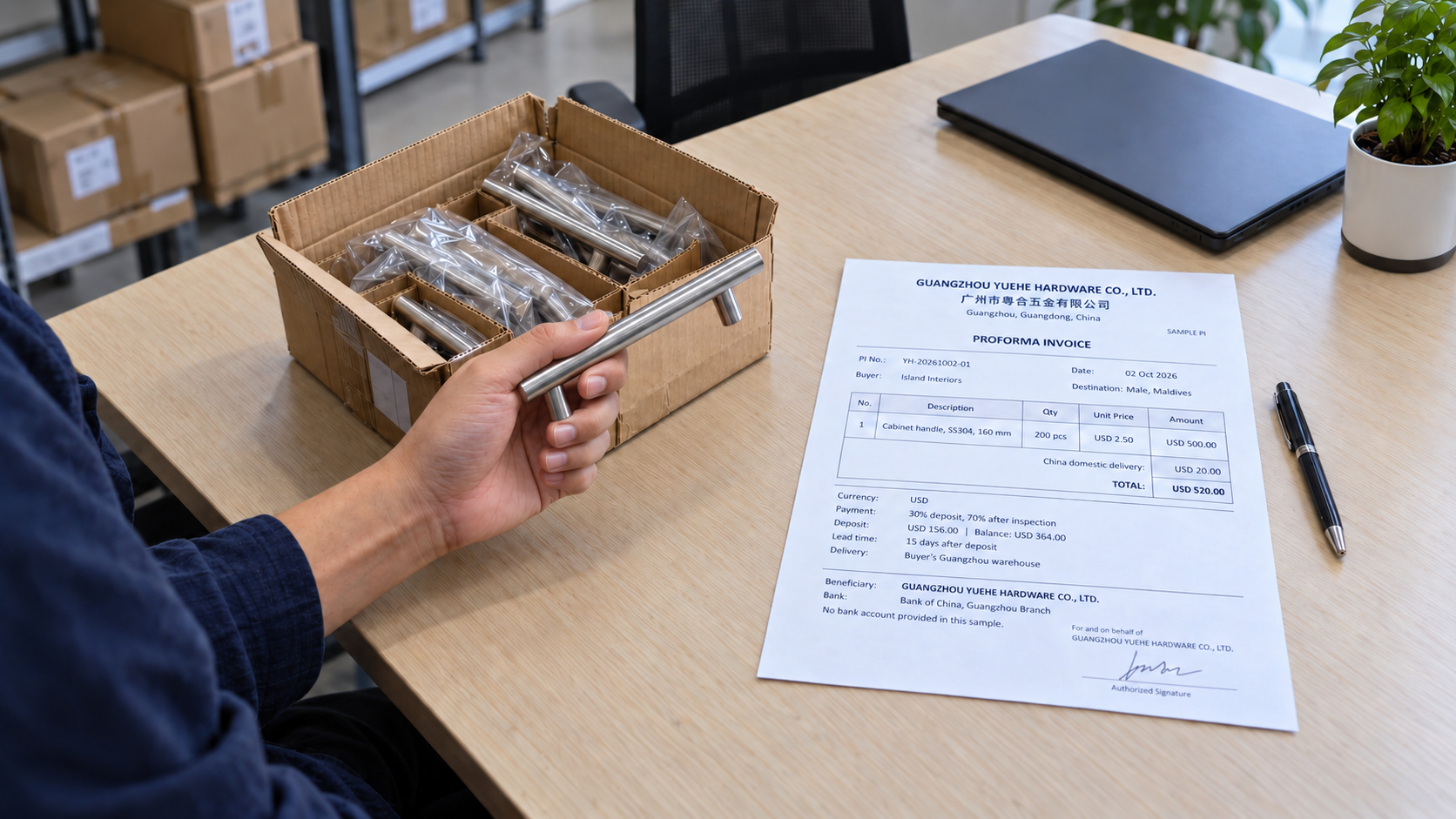
Paying a supplier is one of the points where a sourcing process becomes financially real.
By the time an invoice arrives, it is easy to focus on the amount and payment deadline. A better approach is to pause and verify that the supplier, the order, the bank details and the evidence all match what you intended to buy.
This does not remove every risk. It does make avoidable mistakes easier to catch before the money leaves your account.
1. Confirm who you are actually paying
Start with the legal company name, not only the sales contact, shop name or brand name.
Check that the company name shown on the quotation, proforma invoice, contract and payment instructions is consistent.
If the payment is being requested to a different company, ask why.
Sometimes there is a legitimate reason, such as a related trading company or payment entity. But it should be explained clearly before payment.
2. Match the bank account to the transaction
Do not treat bank details as a routine field.
Before paying, compare the beneficiary name, bank country, account details and currency with the supplier information you already have.
Pay special attention when:
- the beneficiary name is different from the supplier name
- the bank account changes during the order
- the account is in a different country
- the supplier suddenly asks you to pay an individual
- the payment instructions arrive through a new email address or chat account
Any of these can be legitimate. The important point is that you understand the reason before sending money.
3. Reconfirm the product specification
A payment should be tied to a clearly defined order.
Before paying, confirm the exact product, model, size, colour, material, quantity, packaging and any custom requirements that matter.
If a specification is important enough to affect whether you can use or sell the product, it should be written down.
Do not rely only on a photo when a measurement, material grade, voltage, plug type or technical specification matters.
4. Check what the price actually includes
A quoted product price may not include every cost connected to the order.
Confirm whether the price includes:
- domestic delivery in China
- export packing
- pallets or wooden cases
- labelling
- inspection
- taxes or invoicing requirements
- export documentation
- any agreed testing or certificates
The goal is to avoid discovering after payment that an expected item was outside the supplier's scope.
5. Confirm the payment structure
Make sure you understand whether the payment is:
- a deposit
- a full advance
- a balance payment
- a payment against inspection
- a payment before shipment
If there is a deposit and balance structure, confirm what must happen before the balance becomes due.
For example, the balance may be linked to production completion, inspection approval, packing photos or another agreed milestone.
6. Verify the order evidence
Before payment, collect the documents and messages that support the transaction.
A useful file usually includes:
- quotation or proforma invoice
- supplier company details
- agreed product specification
- payment instructions
- key chat or email confirmations
- agreed production or delivery timeline
This makes it easier to resolve confusion later because you can see what was actually agreed before money moved.
7. Reconfirm changes through a trusted channel
One of the easiest mistakes to make is accepting changed payment details without independent confirmation.
If bank details, beneficiary details or payment instructions change, confirm the change through a contact method you already trust.
For example, if new bank details arrive by email, confirm them with the supplier through the existing WeChat contact or a known phone number before paying.
The principle is simple: a change in payment instructions deserves a second check.
8. Check the production and delivery timeline
Before paying, confirm what happens next.
Ask when production will start, when it should finish, when packing will be ready and when the goods can be handed over for shipment.
For urgent orders, ask whether the timeline is based on available stock, planned production or an estimate.
A clear timeline helps you distinguish between a commercial promise and an operational plan.
9. Decide whether inspection is needed
Not every order needs the same level of inspection.
The decision depends on the product, value, complexity, supplier history and consequences of receiving the wrong goods.
For higher-risk orders, consider checking the goods before the final payment or before the goods leave the supplier.
Inspection is most useful when the acceptance criteria are clear in advance.
10. Keep one final pre-payment checklist
Before you send the money, make the final check simple.
Confirm:
- supplier identity
- beneficiary and bank details
- product and quantity
- total amount and currency
- payment stage
- production timeline
- delivery terms
- important supporting documents
- any inspection requirement
If one of these is unclear, resolve it before payment rather than after.
Bottom line: The purpose of a pre-payment check is not to create bureaucracy. It is to make sure the supplier, order, payment and evidence all describe the same transaction before your money leaves your control.
Before you pay a supplier
Use the pre-payment checklist to confirm the supplier, bank details, order scope, payment stage and supporting documents before you send money.
Download the supplier pre-payment checklist →